
GA4 Custom and Predictive Audiences:
Data-Driven Precision for B2B Lead Generation
- Home
- GA4 Custom and Predictive Audiences
Table of Contents
As digital ecosystems become increasingly complex, audience intelligence is emerging as a decisive factor in marketing success. Google Analytics 4 (GA4) introduces custom and predictive audiences, which enable organizations to transform behavioral data into actionable, growth-focused insights.
For B2B enterprises—where purchase decisions involve multiple stakeholders, long sales cycles, and high-value conversions—these GA4 capabilities redefine how marketing and sales teams identify, engage, and convert high-intent prospects.
This article examines how GA4’s audience modeling, when coupled with first-party data and integrated CRM systems, powers next-generation B2B lead generation through predictive intelligence, personalization, and automated remarketing.
The Strategic Role of Audience Intelligence in GA4
In traditional analytics, audiences were static—based on pre-defined segments such as users who visited a page or completed a goal.
GA4 reimagines this concept by enabling dynamic audience creation grounded in event-based data, machine learning, and lifecycle signals.
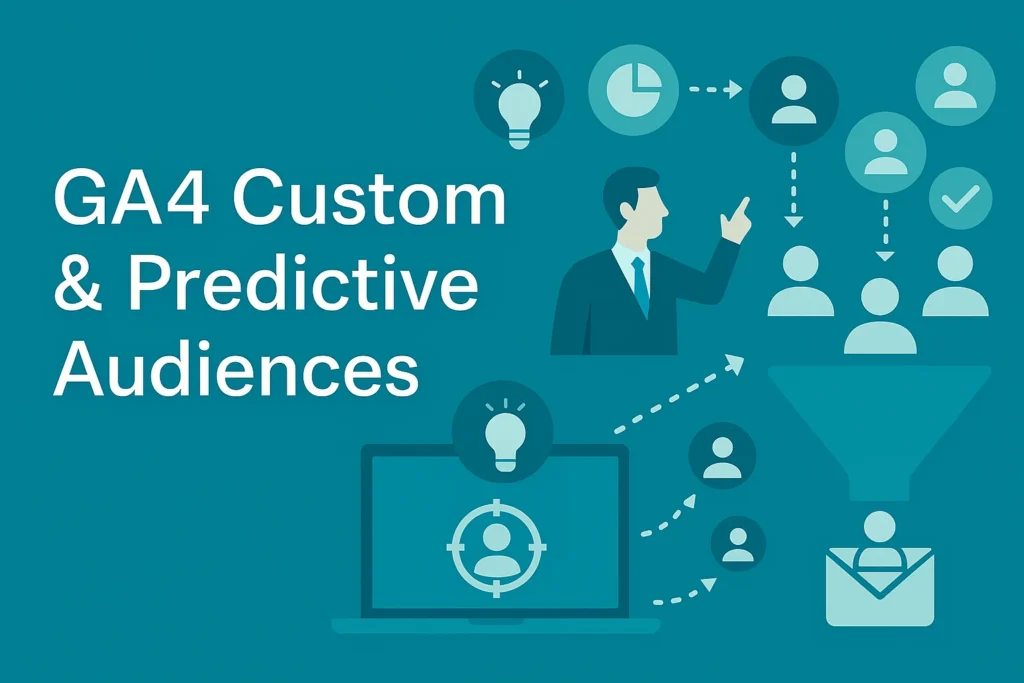
GA4’s custom and predictive audiences extend far beyond demographic or session-based segmentation. They combine cross-channel behavioral insights with AI modeling to help marketing teams anticipate user actions and deliver precision-targeted experiences at scale.
Custom Audiences: Building Precision Segments for the B2B Funnel
a. Definition and Mechanics
Custom audiences in GA4 are rule-based user groups created using combinations of events, parameters, and predictive conditions. They allow businesses to isolate users who exhibit specific behaviors—such as engaging with pricing pages, downloading whitepapers, or initiating a contact form.
b. Application in B2B Lead Generation
In B2B environments, where conversion events may represent multi-stage buyer journeys, custom audiences enable segmentation at key funnel stages:
- Top of Funnel (Awareness): Visitors exploring product overview pages or case studies.
- Middle of Funnel (Engagement): Users returning to compare services or accessing gated content.
- Bottom of Funnel (Intent): Users interacting with “Request a Quote” or demo forms.
By exporting these audiences to Google Ads or LinkedIn Ads, B2B marketers can design campaigns that mirror buyer readiness—reducing wasted spend and improving lead quality.
c. Integration with CRM Data
When GA4 data is linked with a CRM system (e.g., Salesforce, HubSpot, or Zoho) via BigQuery, marketers can enhance segmentation with firmographic and lifecycle attributes—such as industry, company size, and stage in the pipeline—creating true data-enriched audiences.
Predictive Audiences: Leveraging Machine Learning for Intent Forecasting
a. Overview of Predictive Capabilities
Predictive audiences in GA4 are built using Google’s machine learning models, which analyze user patterns to predict outcomes such as:
- Purchase Probability
- Churn Probability
- Predicted Revenue
These models leverage event frequency, engagement recency, and contextual factors to forecast which users are most likely to convert or disengage.
b. B2B Application
While predictive modeling was initially consumer-oriented, B2B organizations can use it to identify high-intent leads based on signals such as:
- Repeated visits to high-value service pages.
- Engagement with multiple case studies.
- Interaction with gated content or webinar signups.
Predictive scoring allows marketing teams to prioritize remarketing spend and alert sales teams to nurture leads most likely to convert within a defined timeframe.
BigQuery Integration: Enhancing Predictive Accuracy
BigQuery plays a pivotal role in scaling GA4 audience intelligence.
By exporting GA4’s event-level data into BigQuery, corporations can:
- Merge marketing data with CRM and advertising performance datasets.
- Build custom predictive models using BigQuery ML to identify patterns specific to B2B buyer behavior.
- Continuously refine audience definitions with updated intent metrics, enabling AI-driven retargeting strategies.
This integration transforms GA4 from a reporting tool into an enterprise data science hub—linking audience modeling with measurable revenue outcomes.
Use Case Scenarios for Enterprise B2B Lead Generation
Scenario 1: Predictive Lead Prioritization
A technology manufacturer uses GA4 predictive audiences to flag visitors with a high probability of conversion (e.g., repeat engagement with “Request a Quote” forms). These users are automatically synced with Google Ads remarketing lists, increasing conversion efficiency by 30%.
Scenario 2: Account-Based Marketing (ABM) Synergy
A global B2B organization integrates GA4 custom audiences with CRM firmographics to identify target companies showing repeat product interest. Predictive scoring in BigQuery determines the optimal remarketing window, improving ad ROI and sales alignment.
Scenario 3: Churn Prevention Through Predictive Engagement
For subscription-based B2B platforms, predictive churn audiences identify accounts showing declining engagement (e.g., fewer logins or reduced content interaction). This triggers automated nurture campaigns that restore retention rates.
Strategic Advantages for B2B Enterprises
Category | Business Advantage |
Lead Intelligence | Identify high-intent prospects earlier in the funnel. |
Ad Efficiency | Optimize bidding and budget allocation by probability modeling. |
Data Integration | Combine CRM, Ads, and GA4 data for unified targeting. |
Predictive Personalization | Deliver content tailored to conversion likelihood. |
Revenue Growth | Align marketing and sales efforts around data-backed prioritization. |
Executive Takeaway
GA4’s custom and predictive audience framework marks a pivotal advancement for B2B data-driven marketing.
By merging machine learning, cross-channel tracking, and cloud integration, enterprises can:
- Anticipate buyer intent.
- Deliver timely, personalized engagement.
- Optimize marketing investment with precision.
For corporate executives, the opportunity is clear: GA4 audiences transform analytics from passive observation into proactive marketing intelligence—empowering teams to turn data into measurable, scalable lead-generation growth.